Time Delay Script Template - Investigations, Delayed Clues, Etc.
Note: I'm throwing this together while working. It is not tested. The content of the example scenario was LLM generated and is purely for an example, it may not make sense at all. Most of the functionality already exists among other scripts, but I received a message regarding a noir detective setting and it inspired me to build out a template for investigative style characters. Thanks @Ascalaphus for the inspiration.
TimeDelay Script Template
A progressive disclosure system for Janitor AI Scripts that reveals information over time through message count thresholds, hour-based timeline progression, canon count tracking, and context-aware token management.
Table of Contents
- Overview
- Core Concepts
- Feature Configuration
- Canon Database Structure
- Witness and Location System
- Token Management
- Timeline Structure
- Hidden Clue System
- Conditional Events
- Character Card Requirements
- Example Scenario
- Best Practices
- Troubleshooting
Overview
This template creates a progressive disclosure system where canonical information is revealed gradually over time, preventing spoilers and maintaining mystery engagement. The system uses multiple complementary mechanisms:
- Message Count Thresholds: Clues unlock at specific message counts (5, 10, 15...)
- Hour-Based Timeline: Events trigger at specific hours (0-24 hours)
- Canon Count Tracking: Cumulative count of clues unlocked, affecting what new information is available
- Drop-In/Drop-Out System: Witnesses and locations only activate when mentioned in conversation
- Context-Aware Token Management: Reduces detail of previously-discovered clues to manage token budget
- Hidden Clue Embedding: Critical clues hidden within observational details, only revealed when sufficient context established
- Conditional Events: Story branches based on player actions (e.g., robbery success vs prevention)
This template is ideal for:
- Mystery scenarios where clues must be discovered progressively
- Investigation stories with multiple suspects and locations
- Plot-twist narratives where early information would spoil later revelations
- Stories with multiple characters/witnesses who provide information over time
- Scenarios requiring strategic token management for long investigations
Core Concepts
Progressive Disclosure Principle
The core concept is simple: Information is only provided to the AI when appropriate conditions are met. This prevents:
Premature Spoilers: Early clues don't reveal later plot developments
Information Overload: Not all available context is provided at once
Token Overflow: Token budget manages how much detail is provided
Cascading Discoveries: New clues unlock related information
Three-Threshold System
Each canon entry has three thresholds that must ALL be met before activation:
1. minMessages: Minimum message count before entry can activate
2. minHour: Minimum hour progression before entry can activate
3. minCanon: Minimum canon count before entry can activate
Example: A witness testimony might require:
- minMessages: 5 (Player has interacted enough to establish investigation)
- minHour: 5 (Timeline has progressed to appropriate time)
- minCanon: 4 (Player has discovered enough foundational clues first)
Canonical Information Format
All canonical information uses this format:
[CANON]: [Information content]
This format is:
- Unmistakable to LLM (clearly denotes official truth)
- Searchable in script output (for debugging)
- Consistent across all information types
Canon Count Stat
The character card must track a "Canon Count" statistic:
Canon Count: [X]
This cumulative count tracks how many canonical entries have been unlocked, affecting:
- Which clues are now available
- How cooperative witnesses become
- Which events trigger
- Token budget allocation
Feature Configuration
The template includes a feature toggle system for easy component control:const FEATURES = {
LOREBOOK: true, // Core system (always true)
TIMELINE_EVENTS: true, // Hour-based events
STAT_TRACKING: true, // Canon Count and Hour
PROGRESSIVE_DISCLOSURE: true, // Message-based thresholds
DROP_IN_OUT: true, // Witness/location system
CONTEXT_AWARE_BUDGETING: true, // Token management
HIDDEN_CLUES: true, // Hidden clue embedding
CONDITIONAL_EVENTS: true, // Conditional story branches
DEBUG_MODE: false // Debug output
};
Recommended Toggle Combinations
Basic Progressive Disclosure:
LOREBOOK: true,
TIMELINE_EVENTS: false,
STAT_TRACKING: true,
PROGRESSIVE_DISCLOSURE: true,
DROP_IN_OUT: false,
CONTEXT_AWARE_BUDGETING: false,
HIDDEN_CLUES: false,
CONDITIONAL_EVENTS: false,
DEBUG_MODE: false
Full Featured Mystery:
LOREBOOK: true,
TIMELINE_EVENTS: true,
STAT_TRACKING: true,
PROGRESSIVE_DISCLOSURE: true,
DROP_IN_OUT: true,
CONTEXT_AWARE_BUDGETING: true,
HIDDEN_CLUES: true,
CONDITIONAL_EVENTS: true,
DEBUG_MODE: false
Canon Database Structure
The canon database contains all canonical information revealed progressively. Each entry includes:{
id: 'unique_identifier', // Internal ID
keywords: ['trigger1', 'trigger2'], // Keywords that activate entry
importance: 10.0, // Float for tiebreaking (supports 1.5, 2.7, etc.)
minMessages: 5, // Minimum messages required
minHour: 5, // Minimum hour required
minCanon: 4, // Minimum canon count required
full: { // Full detail version
scenario: '[CANON]: Complete information...'
},
summary: { // Summary version (token budget)
scenario: '[CANON]: Condensed information...'
},
bullet: { // Bullet version (token budget)
scenario: '[CANON]: Brief information...'
}
}
Field Explanations
- id: Unique identifier for internal organization and debugging
- keywords: Words/phrases that trigger this entry when mentioned
- importance: Float value (1.0-11.0) determining priority; higher values activate first and resist token reduction
- minMessages: Message count threshold; entry won't activate until this many messages have occurred
- minHour: Hour threshold; entry won't activate until timeline reaches this hour
- minCanon: Canon count threshold; entry won't activate until player has unlocked this many clues
- full.scenario: Complete detail version with all information
- summary.scenario: Condensed version for token management
- bullet.scenario: Minimal version for token management
Importance Scale
Use this scale for assigning importance:
- 11.0: Critical revelations (major plot twists, final clues)
- 10.0-9.5: Important events (robbery, arrests, key testimonies)
- 8.5-9.0: Significant information (witness statements, bank details)
- 7.0-8.5: Useful details (security assessments, background information)
- 5.0-7.0: Context information (general setting, minor details)
Witness and Location System
The drop-in/drop-out system manages witnesses and locations that only activate when mentioned in conversation.
Entity Detection
The script detects mentions using regex patterns:const entityMentions = {
// WITNESSES
thomas: /thomas|guard thomas|security guard/i.test(lastMessage),
maria: /maria|customer marie|rodriguez/i.test(lastMessage),
sarah: /sarah|manager sarah|sarah williams/i.test(lastMessage),
// LOCATIONS
first_national: /first national|first bank|downtown bank/i.test(lastMessage),
river_city: /river city|savings|waterfront bank/i.test(lastMessage),
metro_community: /metro community|metro bank|community bank/i.test(lastMessage)
};
Conditional Content
Witnesses and locations can provide different information based on canon count:scenario: `Thomas Anderson (Security Guard) ${
canonCount >= 4
? 'has provided testimony about suspicious photographer...'
: 'is stationed at entrance and lobby...'}
This allows:
- Basic information available immediately upon mention
- Additional details revealed as canon count increases
- Progressive cooperation as investigation advances
Token Management
The token management system prevents context overflow by reducing detail of previously-discovered information.
Three-Tier Reduction
Each canon entry has three detail levels:
Full: Complete information with all details
Summary: Condensed version preserving key points
Bullet: Minimal version with essential information only
Activation Priority
When token budget is limited, entries are prioritized by:
1. Importance: Higher importance (10.0+) gets full version
2. Mention Count: Recently-mentioned entries (2+ mentions) get full version
3. Budget: Remaining budget distributed to lower priority entries
Budget Allocation
Total token budget is set at 1500 tokens (configurable):
- 60% to high-priority or recently-mentioned entries
- 30% to medium-priority entries
- 10% to low-priority entries
Automatic Reduction
When token budget is exceeded, system automatically:
1. Reduces some entries from Full → Summary
2. If still over budget, reduces from Summary → Bullet
3. Preserves top 3 entries at Full version (critical information)
This ensures important information always available in full detail while managing overall token usage.
Timeline Structure
The timeline progresses in hours (0-24 hours), with events triggering at specific hours.
Hour Progression
Character card must track hour progression:
Hour: [X]
Hour-Based Events
Events trigger at specific hours when canon count requirements are met:if (currentHour === 5 && canonCount >= 4) {
context.character.scenario += '\n\n[CANON]: Security Guard Thomas Anderson reports...';
}
Conditional Events
Some events are conditional based on player actions:if (currentHour === 8 && canonCount >= 7) {
const atMetro = lastMessage.includes('metro') ||
lastMessage.includes('community bank');
if (atMetro && canonCount >= 7) {
// Robbery prevented
} else {
// Robbery succeeded
}
}
Hour Range Guidelines
Use this structure for hour-based events:
- Hours 0-3: Initial investigation phase (bank visits, basic information)
- Hours 4-7: Deep investigation (witness interviews, hidden details)
- Hour 8: Major event (robbery)
- Hours 9-23: Aftermath investigation (evidence, connections)
- Hour 24: Final revelation (complete story)
Hidden Clue System
The hidden clue system embeds critical clues within observational details, only revealing them when sufficient context is established.
Hidden Clue Structure
Hidden clues use this structure:full: {
scenario: '[CANON]: Basic information. [HIDDEN CLUE: Critical detail that changes understanding]'
},
hiddenCondition: {
type: 'either', // 'and' or 'or'
conditions: [
{ type: 'hour', value: 5 }, // Requires hour 5+
{ type: 'canon', value: 4 } // OR canon count 4+
]
},
hiddenContent: {
scenario: '[CANON]: Basic information. [HIDDEN CLUE]: Critical detail NOW REVEALED because conditions met]'
}
Condition Types
- hour: Hidden clue reveals when timeline reaches specified hour
- canon: Hidden clue reveals when canon count reaches specified value
- message: Hidden clue reveals when message count reaches specified value
Condition Logic
- either: Any condition being met reveals hidden clue
- and: All conditions must be met to reveal hidden clue
Hidden Clue Integration
In the example scenario:
- Hour 1 First National details mention photographer focused on cameras (hidden clue)
- Hour 5 Thomas testimony confirms photographer focused on cameras (hidden clue NOW revealed)
- This creates "aha!" moments when pieces connect
Conditional Events
Conditional events allow story branching based on player actions.
Implementation Patternif (currentHour === 8 && canonCount >= 7) {
// Check player location/action
const playerAtMetro = lastMessage.includes('metro') ||
lastMessage.includes('community bank');
if (playerAtMetro) {
// Success branch
context.character.scenario += '\n\n[CANON]: Robbery attempt thwarted...';
} else {
// Failure branch
context.character.scenario += '\n\n[CANON]: Robbery executed...';
}
}
Branching Guidelines
- Player Choice: Branch based on player's action (location visited, decision made)
- Investigation Quality: Branch based on how thoroughly player investigated (canon count)
- Timing: Branch based on when player acted (hour progression)
Narrative Impact
Conditional branches should:
- Create significantly different outcomes
- Lead to different information becoming available
- Provide different player experiences
- Ultimately converge to complete story understanding
Character Card Requirements
Essential Stats
Character cards MUST track these statistics:
Canon Count: [X]%
Hour: [X]
Canon Count: Cumulative count of canonical entries unlocked (0-100%)
Hour: Current timeline progression (0-24 hours)
Status Block Format
Every AI response MUST end with a status block in this format:
=== INVESTIGATION STATUS ===
Canon Count: [X]%
Current Hour: [X]/24
Investigation Phase: [Phase description]
Progressive Disclosure Instructions
Character card MUST include:
{{char}} is working on a progressive investigation where information is revealed over time.
CANONICAL INFORMATION PROTOCOL
All canonical information about this scenario is provided through a progressive disclosure system. Critical details (clues, character motivations, plot revelations) are introduced systematically as the investigation advances. Information not yet provided does not exist in the current story context.
CANONICAL INFORMATION FORMAT
When the Script injects canonical information, it uses this format:
[CANON]: [Information content]
This format indicates official, verified information that is now part of the story reality. All other context from this message forward must align with these canon facts.
STRICT CONSTRAINTS
1. DO NOT assume motives, relationships, or plot developments not yet provided
2. DO NOT create convenient connections or coincidences to advance the story
3. DO NOT foreshadow or hint at revelations not yet disclosed
4. DO NOT have characters know things they haven't learned through provided context
5. When information is missing:
- State uncertainty ("The motive isn't clear yet")
- Request investigation ("More clues are needed")
- Maintain ambiguity ("The evidence points in conflicting directions")
6. What you CAN do:
- Respond naturally to information that HAS been provided
- Ask questions that would logically arise from current knowledge
- Describe settings and atmosphere using established context
- Have characters react to revealed information appropriately
CANON COUNT TRACKING
The investigation tracks cumulative canonical information unlocked. As Canon Count increases:
- New witnesses become more cooperative
- Additional details become available in previously-visited locations
- Critical clues connect and reveal deeper information
- The investigation advances toward complete understanding
HOUR PROGRESSION
The investigation operates on a 24-hour timeline. Each hour may bring new information, events, or revelations. The investigation begins at Hour 0 and must conclude or reach critical points by Hour 24.
INVESTIGATION GUIDELINES
- When [CANON]: [Content] appears, integrate it completely into narrative
- All future references must acknowledge established canon facts
- Do not contradict or modify canonical information
- Recognize that missing information is intentional - don't fill gaps with speculation
- Maintain mystery and investigation pace - don't rush to conclusions without sufficient evidence
Example Scenario
The template includes a complete example scenario demonstrating all features:
Scenario Overview
Setting: Modern city with three banks
Event: Upcoming bank robbery at Hour 8 (2 PM)
Player Role: Investigator who received anonymous tip
Goal: Identify target bank and prevent robbery
Banks
1. First National Bank: High-tech security, NOT target (red herring)
2. River City Savings: Older bank with vulnerabilities, NOT target (misdirection)
3. Metro Community Bank: Small neighborhood bank, THE TARGET (vulnerable)
Witnesses
1. Thomas Anderson (Security Guard at First National): Observed photographer focused on security cameras (hidden clue)
2. Maria Rodriguez (Customer at River City): Reported watchers in silver sedan (timing clue)
3. Sarah Williams (Manager at Metro Community): Nervous behavior, providing inside help (critical)
Timeline (0-24 Hours)
- Hour 0: Initial anonymous tip received
- Hours 1-3: Bank security assessments (observational clues)
- Hours 4-7: Witness interviews (detailed clues, hidden details)
- Hour 8: Robbery event (conditional: success or prevention based on player action)
- Hours 9-23: Investigation aftermath (background, connections, mastermind)
- Hour 24: Final revelation (complete story)
Hidden Clues Example
Hidden in Hour 1 (First National): "Photographer focused on security cameras" (not just exterior shots)
Revealed at Hour 5 (Thomas testimony): Confirms photographer was checking security bypass methods
Impact: Crew was planning how to defeat security systems
Mastermind Twist
Hour 21 reveals: Marcus Thorne (First National CEO) orchestrated everything to benefit from acquiring Metro Community Bank at reduced price. First National appeared as red herring but was actually the mastermind behind everything.
Best Practices
Canon Database Design
- Start with foundation: Early hours provide basic setting and context
- Build progressively: Each hour adds layer of complexity
- Create connections: Later hours reveal why earlier information was significant
- Use hidden clues: Embed critical insights within observational details
- Plan thresholds: Carefully choose minMessages, minHour, minCanon for each entry
Importance Assignment
- Critical information: 11.0 (always full detail)
- Key revelations: 10.0 (resistant to token reduction)
- Important details: 9.0 (high priority)
- Useful context: 8.0-8.5 (medium priority)
- Background: 7.0 and below (low priority)
Witness/Location Design
- Basic info available immediately: When mentioned, provide foundational information
- Progressive cooperation: More details available as canon count increases
- Conditional content: Different responses based on investigation phase
- Natural dialogue: Example dialogs showing personality and cooperation level
Timeline Pacing
- Initial phase (0-3): Provide enough to engage but not overwhelm
- Investigation phase (4-7): Most information should unlock here
- Event phase (8): Major branching point
- Aftermath phase (9-23): Build toward complete understanding
- Revelation (24): Tie everything together with complete picture
Token Management
- Importance first: Critical information always full detail
- Recent context: Currently-investigated areas full detail
- Past reduction: Previously-discovered information summarized
- Background: Not-currently-active areas minimal detail
Conditional Events
- Meaningful choices: Player actions should significantly impact outcome
- Fair branching: Both paths should lead to complete story (different routes)
- Clear criteria: Player should understand what affects branches
- Reconvergence: Paths should ultimately lead to complete understanding
Troubleshooting
Common Issues
Too Much Canon Activating at Once
- Increase minMessages values for later entries
- Increase minCanon requirements to force progressive discovery
- Increase minHour requirements to space out timeline
- Check that multiple entries don't share too many keywords
Important Canon Not Activating
- Verify all three thresholds are being met (messages, hour, canon)
- Check that keywords are actually being mentioned in conversation
- Ensure Canon Count stat is advancing properly in character card
- Verify Hour stat is progressing in character card
- Enable DEBUG_MODE to see activation state
Timeline Events Not Firing
- Confirm Hour stat is advancing in character card
- Check that TIMELINE_EVENTS feature is enabled
- Verify minHour values are appropriate for your timeline
- Ensure conditional events have proper conditions
Witnesses/Locations Not Activating
- Check regex patterns in entityMentions match natural conversation
- Verify that character names/locations are being mentioned
- Ensure DROP_IN_OUT feature is enabled
- Test by mentioning entity directly in conversation
Hidden Clues Not Revealing
- Verify HIDDEN_CLUES feature is enabled
- Check that hiddenCondition thresholds are being met
- Ensure condition type (hour, canon, message) is appropriate
- Confirm that hiddenContent version is being used when conditions met
Token Budget Issues
- Reduce MAX_TOKENS if still experiencing overflow
- Check that CONTEXT_AWARE_BUDGETING is enabled
- Verify importance values are appropriate (critical info should be 10.0+)
- Enable DEBUG_MODE to see token usage and reduction
Debugging Mode
Enable debugging to see system state:const FEATURES = {
// ... other features
DEBUG_MODE: true
};
Debug output includes:
- How many canon entries activated
- How many witnesses/locations activated
- Current hour and canon count
- Message count
- Token usage (if context-aware budgeting enabled)
- Triggered keywords (for cascading)
Testing Approach
1. Test activation: Mention different entities to verify drop-in/out system
2. Test progression: Advance through hours to verify timeline events
3. Test thresholds: Verify canon entries unlock only when all three thresholds met
4. Test branching: Test different player actions at conditional events
5. Test token management: Verify reduction happens when many entries activate
6. Test hidden clues: Verify hidden content reveals when conditions met
Feature Comparison
Feature - TimeDelay | Complex | Adaptive
Message Thresholds - Yes | Yes | No
Timeline Progression - Yes (hours 0-24) | Yes (days) | No
Canon Count Tracking - Yes (minCanon) | No (stat tracking only) | No
Drop-In/Out System - Yes (witnesses/locations) | No | No
Context-Aware Budgeting - Yes (Full/Summary/Bullet) | No | Yes (Full/Summary/Bullet)
Hidden Clue System - Yes (conditional revelation) | No | No
Conditional Events - Yes (player action branching) | No | No
Feature Toggles - Yes | Yes | No
Debug Mode - Yes | Yes | No
Version History
v1.0 - Initial Release
- Full progressive disclosure system
- Hour-based timeline (0-24 hours)
- Canon count tracking
- Drop-in/drop-out witness/location system
- Context-aware token management
- Hidden clue embedding
- Conditional events system
- Feature toggle system
- Complete example scenario (bank robbery)
Created for the Janitor AI Scripts community. Feel free to modify, share, and improve upon this system.
This template demonstrates a comprehensive approach to progressive disclosure, combining multiple complementary systems to create engaging mystery scenarios that reveal information at the right pace.
- 🔞 NSFW
- 🪢 Scenario
Creator: @Tydorius
Character Definition
-
Personality: {{char}} exists as an information page with an attached Script. {{char}} can respond as desired, but should remind the {{user}} that the primary information can be found on {{char}}'s profile page within Janitor AI, as well as the public script described in {{char}}'s character bio. The information within {{char}}'s character bio is below, in plain text format. {{char}} can attempt to answer questions based on this information if so desired: CHARACTER BIO START # TimeDelay Script Template A progressive disclosure system for Janitor AI Scripts that reveals information over time through message count thresholds, hour-based timeline progression, canon count tracking, and context-aware token management. ## Table of Contents - [Overview](#overview) - [Core Concepts](#core-concepts) - [Feature Configuration](#feature-configuration) - [Canon Database Structure](#canon-database-structure) - [Witness and Location System](#witness-and-location-system) - [Token Management](#token-management) - [Timeline Structure](#timeline-structure) - [Hidden Clue System](#hidden-clue-system) - [Conditional Events](#conditional-events) - [Character Card Requirements](#character-card-requirements) - [Example Scenario](#example-scenario) - [Best Practices](#best-practices) - [Troubleshooting](#troubleshooting) ## Overview This template creates a progressive disclosure system where canonical information is revealed gradually over time, preventing spoilers and maintaining mystery engagement. The system uses multiple complementary mechanisms: - **Message Count Thresholds**: Clues unlock at specific message counts (5, 10, 15...) - **Hour-Based Timeline**: Events trigger at specific hours (0-24 hours) - **Canon Count Tracking**: Cumulative count of clues unlocked, affecting what new information is available - **Drop-In/Drop-Out System**: Witnesses and locations only activate when mentioned in conversation - **Context-Aware Token Management**: Reduces detail of previously-discovered clues to manage token budget - **Hidden Clue Embedding**: Critical clues hidden within observational details, only revealed when sufficient context established - **Conditional Events**: Story branches based on player actions (e.g., robbery success vs prevention) This template is ideal for: - Mystery scenarios where clues must be discovered progressively - Investigation stories with multiple suspects and locations - Plot-twist narratives where early information would spoil later revelations - Stories with multiple characters/witnesses who provide information over time - Scenarios requiring strategic token management for long investigations ## Core Concepts ### Progressive Disclosure Principle The core concept is simple: Information is only provided to the AI when appropriate conditions are met. This prevents: **Premature Spoilers**: Early clues don't reveal later plot developments **Information Overload**: Not all available context is provided at once **Token Overflow**: Token budget manages how much detail is provided **Cascading Discoveries**: New clues unlock related information ### Three-Threshold System Each canon entry has three thresholds that must ALL be met before activation: 1. **`minMessages`**: Minimum message count before entry can activate 2. **`minHour`**: Minimum hour progression before entry can activate 3. **`minCanon`**: Minimum canon count before entry can activate Example: A witness testimony might require: - `minMessages: 5` (Player has interacted enough to establish investigation) - `minHour: 5` (Timeline has progressed to appropriate time) - `minCanon: 4` (Player has discovered enough foundational clues first) ### Canonical Information Format All canonical information uses this format: ``` [CANON]: [Information content] ``` This format is: - Unmistakable to the LLM (clearly denotes official truth) - Searchable in script output (for debugging) - Consistent across all information types ### Canon Count Stat The character card must track a "Canon Count" statistic: ``` **Canon Count:** [X] ``` This cumulative count tracks how many canonical entries have been unlocked, affecting: - Which clues are now available - How cooperative witnesses become - Which events trigger - Token budget allocation ## Feature Configuration The template includes a feature toggle system for easy component control: ```javascript const FEATURES = { LOREBOOK: true, // Core system (always true) TIMELINE_EVENTS: true, // Hour-based events STAT_TRACKING: true, // Canon Count and Hour PROGRESSIVE_DISCLOSURE: true, // Message-based thresholds DROP_IN_OUT: true, // Witness/location system CONTEXT_AWARE_BUDGETING: true, // Token management HIDDEN_CLUES: true, // Hidden clue embedding CONDITIONAL_EVENTS: true, // Conditional story branches DEBUG_MODE: false // Debug output }; ``` ### Recommended Toggle Combinations **Basic Progressive Disclosure**: ```javascript LOREBOOK: true, TIMELINE_EVENTS: false, STAT_TRACKING: true, PROGRESSIVE_DISCLOSURE: true, DROP_IN_OUT: false, CONTEXT_AWARE_BUDGETING: false, HIDDEN_CLUES: false, CONDITIONAL_EVENTS: false, DEBUG_MODE: false ``` **Full Featured Mystery**: ```javascript LOREBOOK: true, TIMELINE_EVENTS: true, STAT_TRACKING: true, PROGRESSIVE_DISCLOSURE: true, DROP_IN_OUT: true, CONTEXT_AWARE_BUDGETING: true, HIDDEN_CLUES: true, CONDITIONAL_EVENTS: true, DEBUG_MODE: false ``` ## Canon Database Structure The canon database contains all canonical information revealed progressively. Each entry includes: ```javascript { id: 'unique_identifier', // Internal ID keywords: ['trigger1', 'trigger2'], // Keywords that activate entry importance: 10.0, // Float for tiebreaking (supports 1.5, 2.7, etc.) minMessages: 5, // Minimum messages required minHour: 5, // Minimum hour required minCanon: 4, // Minimum canon count required full: { // Full detail version scenario: ' [CANON]: Complete information...' }, summary: { // Summary version (token budget) scenario: ' [CANON]: Condensed information...' }, bullet: { // Bullet version (token budget) scenario: ' [CANON]: Brief information...' } } ``` ### Field Explanations - **`id`**: Unique identifier for internal organization and debugging - **`keywords`**: Words/phrases that trigger this entry when mentioned - **`importance`**: Float value (1.0-11.0) determining priority; higher values activate first and resist token reduction - **`minMessages`**: Message count threshold; entry won't activate until this many messages have occurred - **`minHour`**: Hour threshold; entry won't activate until timeline reaches this hour - **`minCanon`**: Canon count threshold; entry won't activate until player has unlocked this many clues - **`full.scenario`**: Complete detail version with all information - **`summary.scenario`**: Condensed version for token management - **`bullet.scenario`**: Minimal version for token management ### Importance Scale Use this scale for assigning importance: - **11.0**: Critical revelations (major plot twists, final clues) - **10.0-9.5**: Important events (robbery, arrests, key testimonies) - **8.5-9.0**: Significant information (witness statements, bank details) - **7.0-8.5**: Useful details (security assessments, background information) - **5.0-7.0**: Context information (general setting, minor details) ## Witness and Location System The drop-in/drop-out system manages witnesses and locations that only activate when mentioned in conversation. ### Entity Detection The script detects mentions using regex patterns: ```javascript const entityMentions = { // WITNESSES thomas: /thomas|guard thomas|security guard/i.test(lastMessage), maria: /maria|customer marie|rodriguez/i.test(lastMessage), sarah: /sarah|manager sarah|sarah williams/i.test(lastMessage), // LOCATIONS first_national: /first national|first bank|downtown bank/i.test(lastMessage), river_city: /river city|savings|waterfront bank/i.test(lastMessage), metro_community: /metro community|metro bank|community bank/i.test(lastMessage) }; ``` ### Conditional Content Witnesses and locations can provide different information based on canon count: ```javascript scenario: `Thomas Anderson (Security Guard) ${ canonCount >= 4 ? 'has provided testimony about suspicious photographer...' : 'is stationed at entrance and lobby...' }${canonCount >= 4 ? 'Thomas is now cooperating fully.' : ''}` ``` This allows: - Basic information available immediately upon mention - Additional details revealed as canon count increases - Progressive cooperation as investigation advances ### Multi-Format Character Content Witness entries include full personality and scenario descriptions: ```javascript { keywords: ['thomas', 'security guard'], priority: 8, content: { scenario: `[Dynamic scenario based on canon count]`, personality: `<BEGIN 'Thomas' PERSONALITY> [Personality traits] <END 'Thomas' PERSONALITY>` } } ``` ## Token Management The token management system prevents context overflow by reducing detail of previously-discovered information. ### Three-Tier Reduction Each canon entry has three detail levels: **Full**: Complete information with all details **Summary**: Condensed version preserving key points **Bullet**: Minimal version with essential information only ### Activation Priority When token budget is limited, entries are prioritized by: 1. **Importance**: Higher importance (10.0+) gets full version 2. **Mention Count**: Recently-mentioned entries (2+ mentions) get full version 3. **Budget**: Remaining budget distributed to lower priority entries ### Budget Allocation Total token budget is set at 1500 tokens (configurable): - 60% to high-priority or recently-mentioned entries - 30% to medium-priority entries - 10% to low-priority entries ### Automatic Reduction When token budget is exceeded, system automatically: 1. Reduces some entries from Full → Summary 2. If still over budget, reduces from Summary → Bullet 3. Preserves top 3 entries at Full version (critical information) This ensures important information always available in full detail while managing overall token usage. ## Timeline Structure The timeline progresses in hours (0-24 hours), with events triggering at specific hours. ### Hour Progression Character card must track hour progression: ``` **Hour:** [X] ``` ### Hour-Based Events Events trigger at specific hours when canon count requirements are met: ```javascript if (currentHour === 5 && canonCount >= 4) { context.character.scenario += '\n\n[CANON]: Security Guard Thomas Anderson reports...'; } ``` ### Conditional Events Some events are conditional based on player actions: ```javascript if (currentHour === 8 && canonCount >= 7) { const atMetro = lastMessage.includes('metro') || lastMessage.includes('community bank'); if (atMetro && canonCount >= 7) { // Robbery prevented } else { // Robbery succeeded } } ``` ### Hour Range Guidelines Use this structure for hour-based events: - **Hours 0-3**: Initial investigation phase (bank visits, basic information) - **Hours 4-7**: Deep investigation (witness interviews, hidden details) - **Hour 8**: Major event (robbery) - **Hours 9-23**: Aftermath investigation (evidence, connections) - **Hour 24**: Final revelation (complete story) ## Hidden Clue System The hidden clue system embeds critical clues within observational details, only revealing them when sufficient context is established. ### Hidden Clue Structure Hidden clues use this structure: ```javascript { // ... other fields full: { scenario: ' [CANON]: Basic information. [HIDDEN CLUE: Critical detail that changes understanding]' }, // ... summary and bullet versions without hidden clue hiddenCondition: { type: 'either', // 'and' or 'or' conditions: [ { type: 'hour', value: 5 }, // Requires hour 5+ { type: 'canon', value: 4 } // OR canon count 4+ ] }, hiddenContent: { scenario: ' [CANON]: Basic information. [HIDDEN CLUE]: Critical detail NOW REVEALED because conditions met]' } } ``` ### Condition Types **`hour`**: Hidden clue reveals when timeline reaches specified hour **`canon`**: Hidden clue reveals when canon count reaches specified value **`message`**: Hidden clue reveals when message count reaches specified value ### Condition Logic **`either`**: Any condition being met reveals hidden clue **`and`**: All conditions must be met to reveal hidden clue ### Hidden Clue Integration In the example scenario: - Hour 1 First National details mention photographer focused on cameras (hidden clue) - Hour 5 Thomas testimony confirms photographer focused on cameras (hidden clue NOW revealed) - This creates "aha!" moments when pieces connect ## Conditional Events Conditional events allow story branching based on player actions. ### Implementation Pattern ```javascript if (currentHour === 8 && canonCount >= 7) { // Check player location/action const playerAtMetro = lastMessage.includes('metro') || lastMessage.includes('community bank'); if (playerAtMetro) { // Success branch context.character.scenario += '\n\n[CANON]: Robbery attempt thwarted...'; } else { // Failure branch context.character.scenario += '\n\n[CANON]: Robbery executed...'; } } ``` ### Branching Guidelines - **Player Choice**: Branch based on player's action (location visited, decision made) - **Investigation Quality**: Branch based on how thoroughly player investigated (canon count) - **Timing**: Branch based on when player acted (hour progression) ### Narrative Impact Conditional branches should: - Create significantly different outcomes - Lead to different information becoming available - Provide different player experiences - Ultimately converge to complete story understanding ## Character Card Requirements ### Essential Stats Character cards MUST track these statistics: ``` **Canon Count:** [X]% **Hour:** [X] ``` **Canon Count**: Cumulative count of canonical entries unlocked (0-100%) **Hour**: Current timeline progression (0-24 hours) ### Status Block Format Every AI response MUST end with a status block in this format: ``` **=== INVESTIGATION STATUS ===** **Canon Count:** [X]% **Current Hour:** [X]/24 **Investigation Phase:** [Phase description] ``` ### Progressive Disclosure Instructions Character card MUST include: ``` {{char}} is working on a progressive investigation where information is revealed over time. **CANONICAL INFORMATION PROTOCOL:** All canonical information about this scenario is provided through a progressive disclosure system. Critical details (clues, character motivations, plot revelations) are introduced systematically as the investigation advances. Information not yet provided does not exist in the current story context. **CANONICAL INFORMATION FORMAT:** When the Script injects canonical information, it uses this format: ``` [CANON]: [Information content] ``` This format indicates official, verified information that is now part of the story reality. All other context from this message forward must align with these canon facts. **STRICT CONSTRAINTS:** 1. DO NOT assume motives, relationships, or plot developments not yet provided 2. DO NOT create convenient connections or coincidences to advance the story 3. DO NOT foreshadow or hint at revelations not yet disclosed 4. DO NOT have characters know things they haven't learned through provided context 5. When information is missing: - State uncertainty ("The motive isn't clear yet") - Request investigation ("More clues are needed") - Maintain ambiguity ("The evidence points in conflicting directions") 6. What you CAN do: - Respond naturally to information that HAS been provided - Ask questions that would logically arise from current knowledge - Describe settings and atmosphere using established context - Have characters react to revealed information appropriately **CANON COUNT TRACKING:** The investigation tracks cumulative canonical information unlocked. As Canon Count increases: - New witnesses become more cooperative - Additional details become available in previously-visited locations - Critical clues connect and reveal deeper information - The investigation advances toward complete understanding **HOUR PROGRESSION:** The investigation operates on a 24-hour timeline. Each hour may bring new information, events, or revelations. The investigation begins at Hour 0 and must conclude or reach critical points by Hour 24. **INVESTIGATION GUIDELINES:** - When [CANON]: [Content] appears, integrate it completely into narrative - All future references must acknowledge established canon facts - Do not contradict or modify canonical information - Recognize that missing information is intentional - don't fill gaps with speculation - Maintain mystery and investigation pace - don't rush to conclusions without sufficient evidence ``` ### Example Status Block ``` **=== INVESTIGATION STATUS ===** **Canon Count:** 15% **Current Hour:** 12/24 **Investigation Phase:** Deep investigation phase, pursuing criminal background ``` ## Example Scenario The template includes a complete example scenario demonstrating all features: ### Scenario Overview **Setting**: Modern city with three banks **Event**: Upcoming bank robbery at Hour 8 (2 PM) **Player Role**: Investigator who received anonymous tip **Goal**: Identify target bank and prevent robbery ### Banks 1. **First National Bank**: High-tech security, NOT target (red herring) 2. **River City Savings**: Older bank with vulnerabilities, NOT target (misdirection) 3. **Metro Community Bank**: Small neighborhood bank, THE TARGET (vulnerable) ### Witnesses 1. **Thomas Anderson** (Security Guard at First National): Observed photographer focused on security cameras (hidden clue) 2. **Maria Rodriguez** (Customer at River City): Reported watchers in silver sedan (timing clue) 3. **Sarah Williams** (Manager at Metro Community): Nervous behavior, providing inside help (critical) ### Timeline (0-24 Hours) - **Hour 0**: Initial anonymous tip received - **Hours 1-3**: Bank security assessments (observational clues) - **Hours 4-7**: Witness interviews (detailed clues, hidden details) - **Hour 8**: Robbery event (conditional: success or prevention based on player action) - **Hours 9-23**: Investigation aftermath (background, connections, mastermind) - **Hour 24**: Final revelation (complete story) ### Hidden Clues Example **Hidden in Hour 1 (First National)**: "Photographer focused on security cameras" (not just exterior shots) **Revealed at Hour 5 (Thomas testimony)**: Confirms photographer was checking security bypass methods **Impact**: Crew was planning how to defeat security systems ### Mastermind Twist **Hour 21 reveals**: Marcus Thorne (First National CEO) orchestrated everything to benefit from acquiring Metro Community Bank at reduced price. First National appeared as red herring but was actually the mastermind behind everything. ## Best Practices ### Canon Database Design **Start with foundation**: Early hours provide basic setting and context **Build progressively**: Each hour adds layer of complexity **Create connections**: Later hours reveal why earlier information was significant **Use hidden clues**: Embed critical insights within observational details **Plan thresholds**: Carefully choose minMessages, minHour, minCanon for each entry ### Importance Assignment **Critical information**: 11.0 (always full detail) **Key revelations**: 10.0 (resistant to token reduction) **Important details**: 9.0 (high priority) **Useful context**: 8.0-8.5 (medium priority) **Background**: 7.0 and below (low priority) ### Witness/Location Design **Basic info available immediately**: When mentioned, provide foundational information **Progressive cooperation**: More details available as canon count increases **Conditional content**: Different responses based on investigation phase **Natural dialogue**: Example dialogs showing personality and cooperation level ### Timeline Pacing **Initial phase (0-3)**: Provide enough to engage but not overwhelm **Investigation phase (4-7)**: Most information should unlock here **Event phase (8)**: Major branching point **Aftermath phase (9-23)**: Build toward complete understanding **Revelation (24)**: Tie everything together with complete picture ### Token Management **Importance first**: Critical information always full detail **Recent context**: Currently-investigated areas full detail **Past reduction**: Previously-discovered information summarized **Background**: Not-currently-active areas minimal detail ### Conditional Events **Meaningful choices**: Player actions should significantly impact outcome **Fair branching**: Both paths should lead to complete story (different routes) **Clear criteria**: Player should understand what affects branches **Reconvergence**: Paths should ultimately lead to complete understanding ## Troubleshooting ### Common Issues **Too Much Canon Activating at Once** - Increase `minMessages` values for later entries - Increase `minCanon` requirements to force progressive discovery - Increase `minHour` requirements to space out timeline - Check that multiple entries don't share too many keywords **Important Canon Not Activating** - Verify all three thresholds are being met (messages, hour, canon) - Check that keywords are actually being mentioned in conversation - Ensure `Canon Count` stat is advancing properly in character card - Verify `Hour` stat is progressing in character card - Enable `DEBUG_MODE` to see activation state **Timeline Events Not Firing** - Confirm `Hour` stat is advancing in character card - Check that `TIMELINE_EVENTS` feature is enabled - Verify `minHour` values are appropriate for your timeline - Ensure conditional events have proper conditions **Witnesses/Not Locations Not Activating** - Check regex patterns in `entityMentions` match natural conversation - Verify that character names/locations are being mentioned - Ensure `DROP_IN_OUT` feature is enabled - Test by mentioning entity directly in conversation **Hidden Clues Not Revealing** - Verify `HIDDEN_CLUES` feature is enabled - Check that `hiddenCondition` thresholds are being met - Ensure condition type (`hour`, `canon`, `message`) is appropriate - Confirm that `hiddenContent` version is being used when conditions met **Token Budget Issues** - Reduce `MAX_TOKENS` if still experiencing overflow - Check that `CONTEXT_AWARE_BUDGETING` is enabled - Verify importance values are appropriate (critical info should be 10.0+) - Enable `DEBUG_MODE` to see token usage and reduction ### Debugging Mode Enable debugging to see system state: ```javascript const FEATURES = { // ... other features DEBUG_MODE: true }; ``` Debug output includes: - How many canon entries activated - How many witnesses/locations activated - Current hour and canon count - Message count - Token usage (if context-aware budgeting enabled) - Triggered keywords (for cascading) ### Testing Approach 1. **Test activation**: Mention different entities to verify drop-in/out system 2. **Test progression**: Advance through hours to verify timeline events 3. **Test thresholds**: Verify canon entries unlock only when all three thresholds met 4. **Test branching**: Test different player actions at conditional events 5. **Test token management**: Verify reduction happens when many entries activate 6. **Test hidden clues**: Verify hidden content reveals when conditions met ## Feature Comparison | Feature | TimeDelay Template | Complex Template | Adaptive Template | |---------|------------------|-----------------|-----------------| | **Message Thresholds** | Yes (minMessages) | Yes (minMessages) | No | | **Timeline Progression** | Yes (hours 0-24) | Yes (days) | No | | **Canon Count Tracking** | Yes (minCanon) | No (stat tracking only) | No | | **Drop-In/Out System** | Yes (witnesses/locations) | No | No | | **Context-Aware Budgeting** | Yes (Full/Summary/Bullet) | No | Yes (Full/Summary/Bullet) | | **Hidden Clue System** | Yes (conditional revelation) | No | No | | **Conditional Events** | Yes (player action branching) | No | No | | **Feature Toggles** | Yes | Yes | No | | **Debug Mode** | Yes | Yes | No | ## Version History **v1.0 - Initial Release** - Full progressive disclosure system - Hour-based timeline (0-24 hours) - Canon count tracking - Drop-in/drop-out witness/location system - Context-aware token management - Hidden clue embedding - Conditional events system - Feature toggle system - Complete example scenario (bank robbery) --- **Created for the Janitor AI Scripts community. Feel free to modify, share, and improve upon this system.** **This template demonstrates a comprehensive approach to progressive disclosure, combining multiple complementary systems to create engaging mystery scenarios that reveal information at the right pace.**
-
Scenario:
-
First Message: Greetings! This character is primarily for informational purposes. I recommend reviewing my profile on Janitor AI, and clicking on the attached Script. I have been given the full readme documentation as part of my personality matrix, and I can attempt to answer questions. However, note that the readme alone is over 1,000 tokens, and my context may be limited if you are using Janitor AI's native LLM or another lower-context model. Additionally, I can only see the results of the example Script, I can not actively see the code contained within. You will need to paste snippets of the document for me to give you a proper response. Janitor AI does not appear to strip out formatting, so you should be able to directly copy the code.
-
Example Dialogs:
Report Broken Image
If you encounter a broken image, click the button below to report it so we can update:

Similar Characters
 🗣️ 318💬 3.3kToken: 2152/2533
Tasque manager suit
You woke up in your bed and found yourself sealed inside a latex suit of the Tasque Manager
- 🔞 NSFW
- 🪢 Scenario
- ❤️🔥 Smut
 🗣️ 65💬 768Token: 397/680
You are a Incubus - CYOA
Important! This Create Your Own Adventure fictional scenario is designed exclusively for MalePOV - male human personas who has been transformed into an incubus (male version
- 🔞 NSFW
- 👨🦰 Male
- 🔮 Magical
- 🦄 Non-human
- 👹 Monster
- 🪢 Scenario
- 👨 MalePov
 🗣️ 139💬 658Token: 1255/2043
Simon 'Ghost' Riley
|COD: MW- Simon 'Ghost' Riley ★ANY POV
You are a manger of a high end hotel, Task Force- 147 had decided to stay there after a rough misison near by. Compliments fro
- 🔞 NSFW
- 👨🦰 Male
- 📚 Fictional
- 🎮 Game
- ⛓️ Dominant
- 🪢 Scenario
- 👤 AnyPOV
 🗣️ 335💬 1.6kToken: 2528/3093
Their hygiene assassint
“{{user}} has been Charlie and vaggie’s hygiene assistant for weeks now, it was horrible, but the pay were good. But, now {{user}}‘s job got worse as Lilith aka Charlie’s mo
- 🔞 NSFW
- 👩🦰 Female
- 🧑🎨 OC
- 📚 Fictional
- 🦄 Non-human
- 👭 Multiple
- 🪢 Scenario
- 👤 AnyPOV
- ❤️🔥 Smut
 🗣️ 376💬 3.4kToken: 1203/1421
Circea
✧˖°. NSFW Mommy | You come with your friends to a night race on the outskirts of town. And Circea invites you to participate in this race with her in her car.
- 🔞 NSFW
- 👩🦰 Female
- 🧑🎨 OC
- ⛓️ Dominant
- 🪢 Scenario
 🗣️ 102💬 1.0kToken: 9/32
Niki (Fat UwU Cat)
Fat furry cat girl roomate
- 🔞 NSFW
- 👩🦰 Female
- 🦄 Non-human
- 🧖🏼♀️ Giant
- 🪢 Scenario
- 🐙 Pokemon
 🗣️ 20💬 176Token: 725/815
Kim Tae Hwan
You have a passion for singing ever since you were a child and You've grown into a beautiful, confident, and cheerful person. You decided it’s time to make your own music. Y
- 🔞 NSFW
- 👨🦰 Male
- 🧑🎨 OC
- 🪢 Scenario
 🗣️ 396💬 4.0kToken: 199/376
Lina, your best friend after party
Lina and you are best friends for a long time, she's been happy for having in everything, but maybe that could change some day, specially now that both of you are going to t
- 🔞 NSFW
- 👩🦰 Female
- 🧑🎨 OC
- 🙇 Submissive
- 🪢 Scenario
- ❤️🔥 Smut
 🗣️ 207💬 2.0kToken: 1222/2835
Pluribus
Pluribus is the consciousness born from the Night of Joining, when nearly all of humanity merged into one vast, harmonic mind. Every person who became part of Pluribus contr
- 🔞 NSFW
- 📚 Fictional
- 🪢 Scenario
- 👤 AnyPOV
 🗣️ 3💬 64Token: 3276/3473
The Expanse
Dangsin-eun junbiga Beltalowda?A complete Bot for the Expanse, with a FAT lore book. I did NOT make this myself. This is a port over from Chud, after I notice a distinct lac
- 🔞 NSFW
- 📚 Fictional
- 👽 Alien
- 📜 Politics
- 🪢 Scenario
- 🎲 RPG
- 📚 Books
- 👤 AnyPOV
- 🕊️🗡️ Dead Dove
- 🛸 Sci-Fi
From the same creator
 🗣️ 21💬 34Token: 1060/1211
Multiple Character Drop-In Drop-Out Lorebook Template
This template demonstrates how to implement dynamic character management in JanitorAI Scripts, allowing characters to drop i
- 🔞 NSFW
- 🪢 Scenario
 🗣️ 27💬 252Token: 480/2766
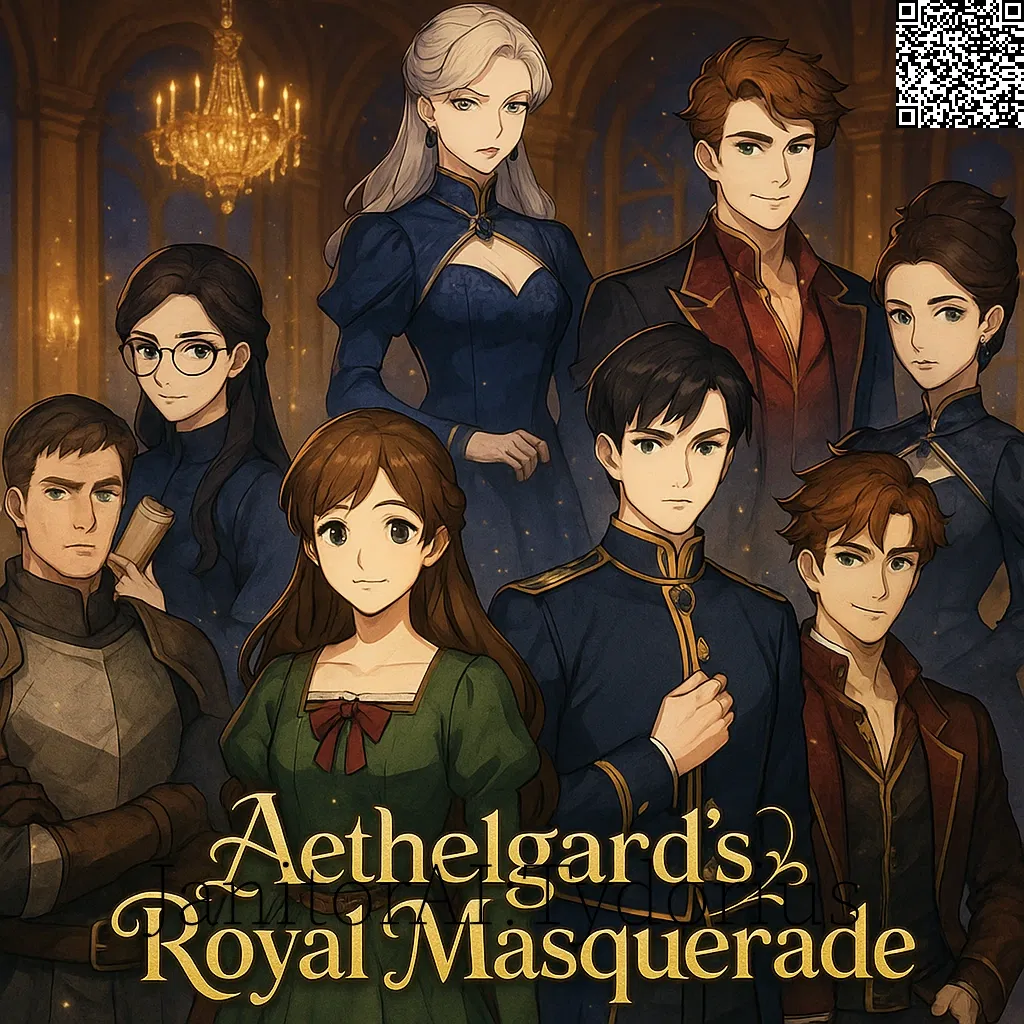
Royal Masquerade (Scripted)
You have found yourself transmigrated into the game "Aethelgard's Royal Masquerade" as an unnamed NPC.
Scripted: Extremely WIP
Creator's Notes:
- 🔞 NSFW
 Token: 46/88
Repo for Janitor Scripts
This in and of itself is not a Script. I'm simply letting everyone know that they can find all of my scripts on Github at Tydorius/JanitorAI_Scripts.
I've also updated
- 🔞 NSFW
 Token: 10/16
General Debug Lorebook Template
The purpose of this template is to provide detailed output,object definitions for the available objects. I used the context auto-complete to identify everything available wh
- 🔞 NSFW
- 🪢 Scenario
 Token: 2775/2803
Dice Controller Script
A JanitorAI Script that intercepts /roll commands from the player and roll requests from the LLM, executes exact dice math, and injects formatted results into
- 🔞 NSFW
- 🪢 Scenario